
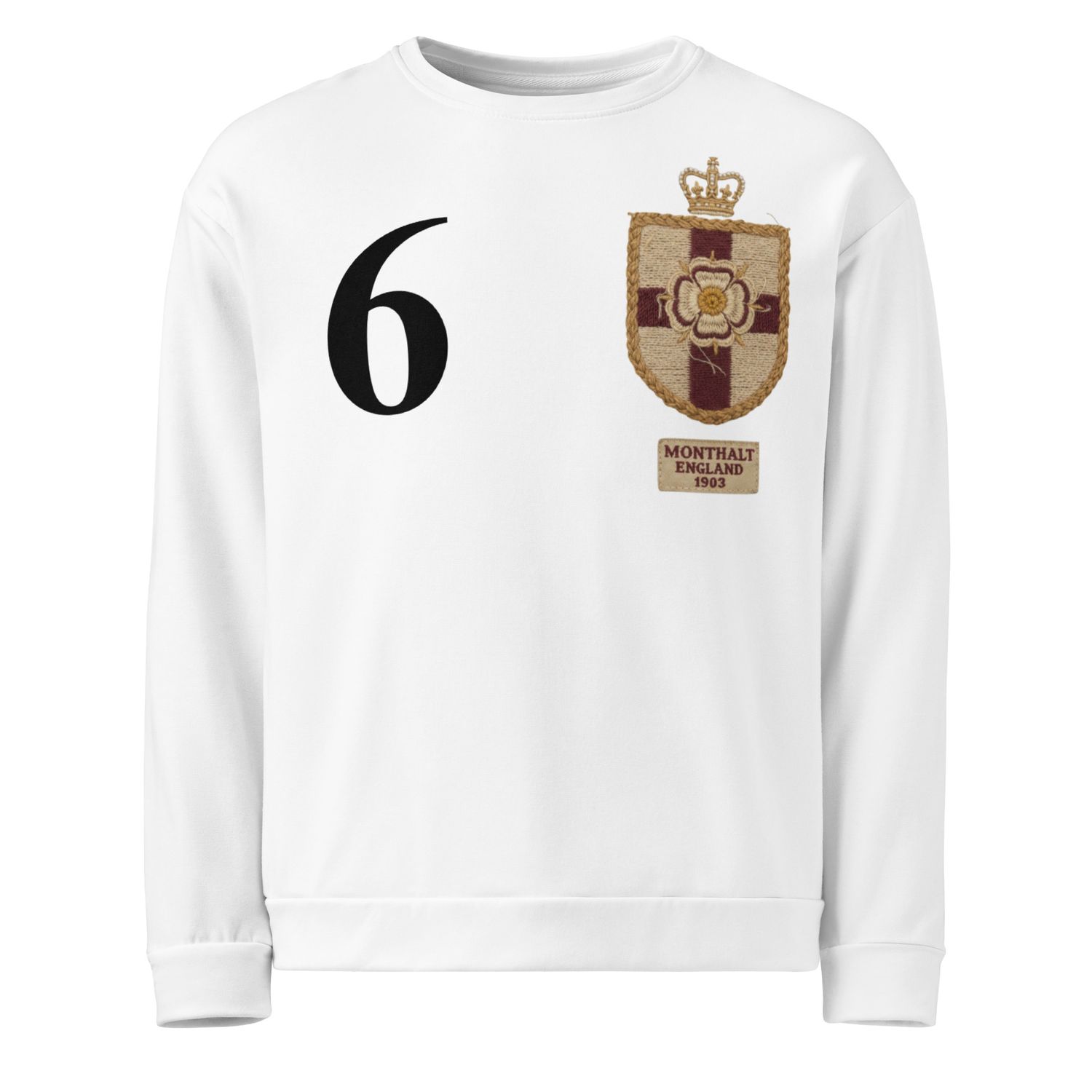
England 1903 — Monthalt® Heritage Jersey (No.6)
The England 1903 — Monthalt Heritage Jersey (No.6) is a tribute to one of the purest eras in the game’s early history — a time before sponsors, before modern fabrics, before football became an industry. This was the era of wool, heavy cotton, lace-up collars, and men who played simply because they loved the sport.
Monthalt’s recreation stays loyal to the original 1903 aesthetic:
a clean white heavyweight cotton body, deep-cut lace neckline, reinforced stitching, and a bold number 6 stitched in period style. In the early 1900s, the No.6 shirt represented the heartbeat of the side — the player who anchored the shape, led from the middle, and carried the responsibility of the English game’s early evolution.
This isn’t a replica of a moment — it’s a revival of a turning point.
1903 was an era when England’s kit symbolised discipline, respect, structure, and the birth of real international football culture. Monthalt brings that history back with premium craft and absolute respect for the era.
For collectors who value origins, for purists who love early football history, and for anyone who understands that the game’s identity was forged long before it was televised.
Monthalt revives England’s 1903 spirit — honest, unpolished, and timeless.
Each unique, all-over printed sweatshirt is precision-cut and hand-sewn to achieve the best possible look and bring out the intricate design. What's more, the durable fabric with a cotton-feel face and soft brushed fleece inside means that this sweatshirt is bound to become your favorite for a long time.
• 96% recycled polyester, 4% elastane for manufacturing in the US/Mexico
• 95% recycled polyester, 5% elastane for manufacturing in Latvia
• Fabric weight (may vary by 5%): 9.08 oz./yd.² (308 g/m²)
• Soft cotton-feel face
• Brushed fleece fabric inside
• Unisex fit
• Overlock seams
• Blank components sourced from China
This product is made especially for you as soon as you place an order, which is why it takes us a bit longer to deliver it to you. Making products on demand instead of in bulk helps reduce overproduction, so thank you for making thoughtful purchasing decisions!
